
 View All
Uncategorized
Discreet Weed Delivery UK: How Careful Shipping Actually Works
Jul
The short version: a proper discreet parcel is tracked, sealed, unbranded, and looks and feels like ordinary post. No sender name that gives anything away, no smell escaping the packaging, and no words on the outside that would make a housemate, a neighbour or a postman look twice. This guide covers what “discreet” actually means when a UK store gets it right, and how to tell a careful sender from a careless one.
What does discreet shipping actually mean?
Discreet shipping means the parcel does not tell anyone what is inside it. In practice that comes down to four things: a neutral outer package with no branding, a return address that reads as an ordinary sender, odour containment so nothing gets through the outer layer, and a real tracked service so you can see where the parcel is at every step. If any of those four is missing, the parcel is not really discreet, it is just quiet.
Everything on our end is set up around those four rules. If you want to see how the full order-to-doorstep flow works from the buyer’s side, our FAQ page walks through it end to end.
How is a discreet parcel actually packed?
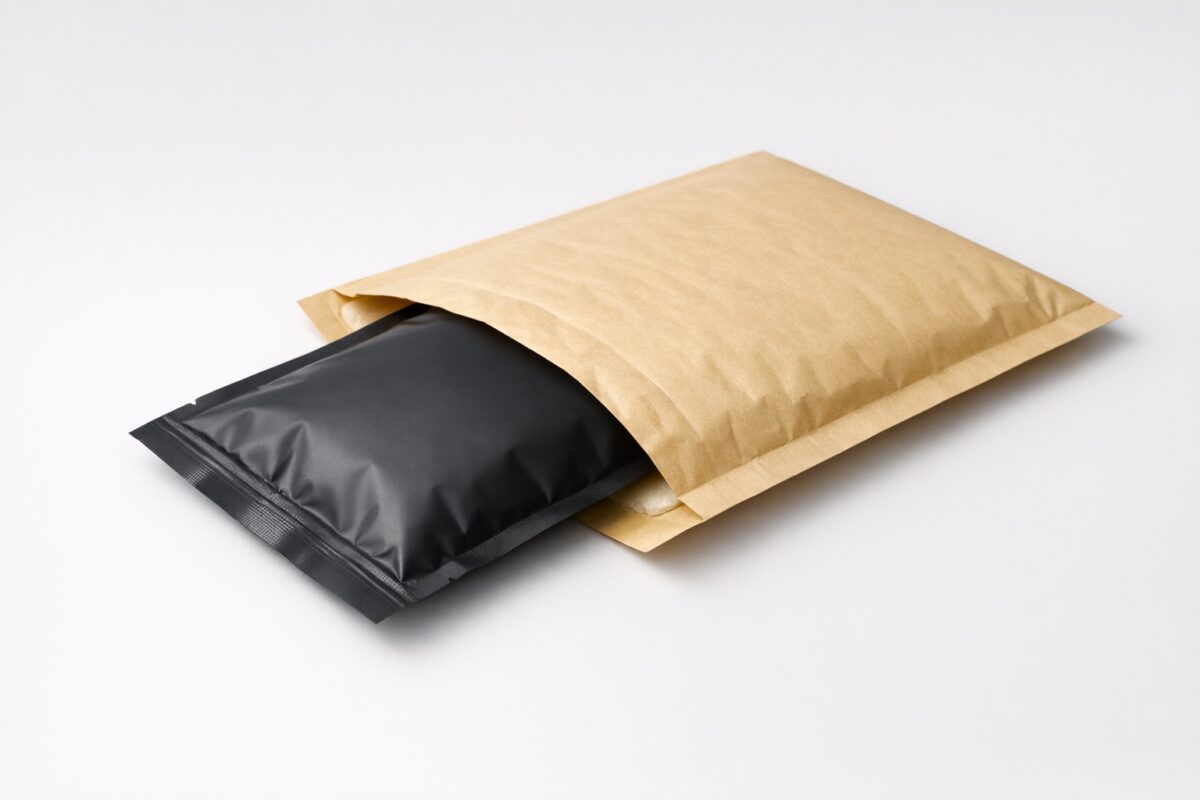
A well-packed parcel uses layers. Each layer has a job, and together they turn a fragrant product into a plain box that does not smell, rattle, or announce itself.
- Inner seal. The product goes into a heat-sealed or vacuum-sealed pouch. This is the single biggest odour barrier and it also protects freshness. A pouch that has been properly heat-sealed will not weep smell even under pressure.
- Odour-masking layer. Around the inner seal we add a second layer that neutralises anything the pouch does not catch. This is why a properly shipped parcel opens with almost no scent, then only smells when you break the inner seal.
- Rigid outer. Cardboard or a padded mailer that hides the shape of the contents. No branded tape, no shop stickers, no logos of any kind. From the outside it looks like a small online order of anything.
- Neutral label. A plain sender name and a plain product description on the customs or postage label. Nothing that hints at what is inside.
Done properly, the parcel weighs and feels like any other small package. That is the whole point.
Is Royal Mail tracked delivery private?
Yes. Royal Mail tracked services show the parcel’s progress to you and the sender, and to nobody else. The tracking number is generated by Royal Mail and links to your delivery address; it does not describe the contents. When you use the tracking number on royalmail.com you see scan events (accepted, in transit, out for delivery, delivered) and that is all. Neighbours, housemates and delivery drivers see only the outer packaging.
Tracked matters for a second reason too: if a parcel gets stuck or misrouted, tracking is what lets a store see the problem quickly and make it right. Untracked post gives nobody any evidence, which is why we do not use it.
Do UK parcels get opened or inspected?
Domestic UK post moves through automated sorting machinery, not manual inspection. Parcels are weighed and scanned by machines, then routed to your local delivery office. Ordinary small parcels are not routinely opened. When post does get held up, it is usually a logistical issue (a bad barcode, a wrong postcode, a damaged label) rather than an inspection. That is why address accuracy and clean labels matter more than most buyers realise.
Practical takeaway: type your address exactly as it appears on your utility bill or bank statement. One character wrong in a postcode is the single most common reason a parcel is delayed.
What are the signs of a careful sender?
You can usually tell within thirty seconds of a parcel arriving whether it was packed by someone who cares. Here is the checklist.
- No branding of any kind on the outside. No stickers, no logos, no clever names in the return address.
- No smell. If you can smell it through the outer, the inner seal has failed. A well-packed parcel is scentless until you cut it open.
- Tracked service, updated in real time. You should be able to see scans within a day of dispatch. A store that ships and then goes quiet is a bad sign.
- Sensible sender name. A neutral name and address, not something that would make anyone suspicious.
- Solid packing. The parcel should not rattle. Contents should be padded and immobile.
- A clean returns process if anything goes wrong. A careful sender takes responsibility for lost or damaged parcels rather than blaming the courier.
What should you do when the parcel arrives?
Open it somewhere private, not on the doorstep. Cut the outer packaging away and keep the inner seal intact until you actually want to use it: the seal is your freshness protection as well as your odour barrier. Store the product in the pouch it arrived in, or move it to an airtight jar out of light and heat. See our hash and flower pages for what to expect from each format on arrival.
If anything is missing, damaged, or does not match what you ordered, get in touch straight away. Photos help. A responsible store will make it right without an argument. That is what “stands behind what it sells” actually means in practice.
How can you help your parcel arrive smoothly?
Most of the discreet-shipping equation is the sender’s job. The buyer’s part is short but it matters.
- Give the exact delivery address you receive normal post at. Not a nickname for the flat, not a former address. Your parcel goes to whatever you type.
- Include your full postcode, spelled correctly. Postcodes are the single most-scanned part of any UK label. A wrong character can send a parcel to the wrong sorting office and add days.
- Make sure someone can accept the parcel or have a safe place agreed with your courier. Royal Mail will leave a card if nobody is home; the parcel then waits at the local depot for you to collect or redeliver.
- Watch tracking, not the letterbox. If tracking says out for delivery, it is out for delivery. If tracking has not updated in two working days, that is when a real problem is worth flagging.
Common questions
Can neighbours or housemates tell what is in the parcel?
Not if it is packed properly. A well-sealed, unbranded, odour-contained parcel looks identical to any other small online order. That is the entire design goal.
Does tracked post share the contents with anyone?
No. Tracking data is a scan history for the parcel’s route to your address. It contains no description of what is inside. The sender and the recipient are the only parties who see the tracking events on the parcel.
What happens if the parcel goes missing?
A careful sender monitors tracking on every parcel, spots stuck ones early, and either resends or refunds when a genuine loss is confirmed. Ask any store you buy from what their policy is before you order; a shop that will not put it in writing is not worth the risk.
Is the smell really the main giveaway?
Yes. If a parcel smells, everything else is irrelevant, so the inner seal and odour-masking layer are the pieces of packing that matter most. A silent parcel that looks like a normal mailer is a well-shipped parcel.
How long does UK tracked delivery usually take?
Royal Mail Tracked 24 aims to arrive the next working day after dispatch, and Tracked 48 aims for one to two working days. Real-world delivery windows depend on where you are, when the parcel was scanned in, and how busy the network is. Weekends and bank holidays add time. Our FAQ has current dispatch cutoffs.
